CrossGrams - PvP Puzzle Game
FunCraft GamesTrivia
4.974.00 Reviews
- Version
- 1.1.25159
- Installs
- 10.00K
- Age Rating
- Everyone
Screenshots
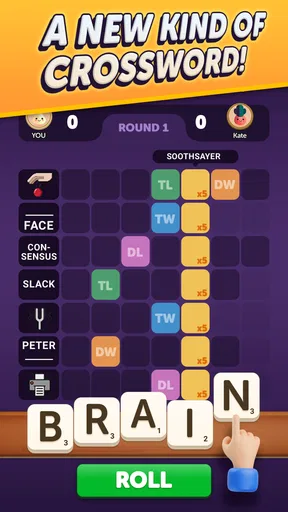
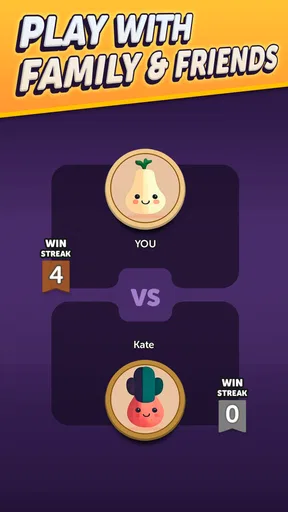
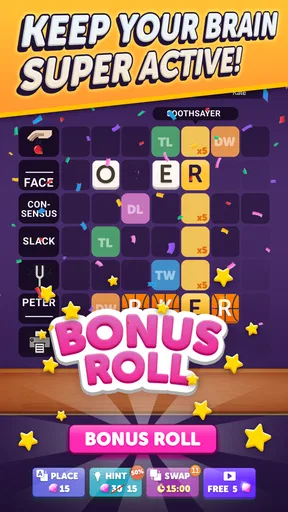
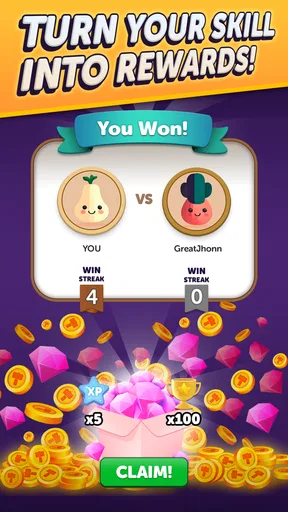
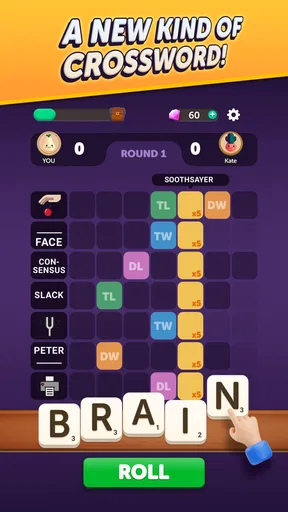
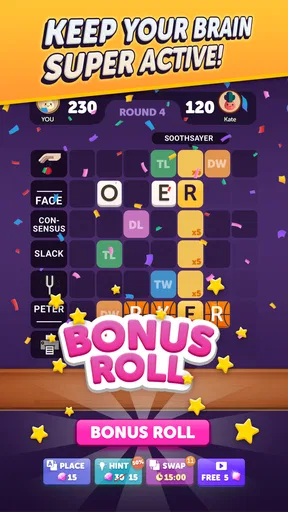
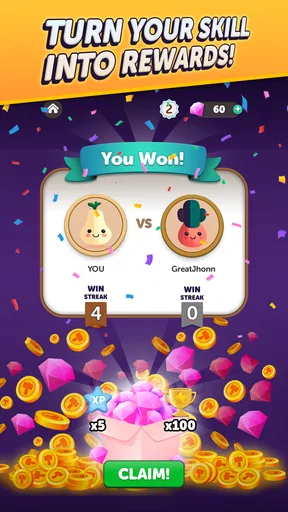
Our Review of CrossGrams - PvP Puzzle Game
 Analysis by Appyee
CrossGrams - PvP Puzzle Game is the kind of trivia title I can imagine opening for a quick mental workout, then staying longer than planned because every round feels like a small contest. Its focus is competitive crossword play rather than a quiet solo puzzle book, so the appeal comes from combining word knowledge, speed, and the pressure of playing against another person. I reviewed it as a game for Android, and my first impression is that it works best when you enjoy puzzles but also want a reason to care about the next answer.
FunCraft Games presents CrossGrams as a free game for Everyone, with a store rating of 4.9 from around 800 ratings and more than 10K installs. Those figures suggest that the early audience has responded warmly, although the install base is still modest compared with long-established mobile trivia games. The game was released on March 4, 2026, and version 1.1.25159 is the current version. It requires Android 7.0 or later, so most reasonably recent Android phones should be able to run it.
How the crossword duel feels in everyday play
The central idea is easy to understand: solve crossword-style clues while competing in a head-to-head format. That distinction matters. A traditional crossword gives me time to think, erase, and return later. CrossGrams adds urgency, which changes how I approach familiar clues. I am not only asking whether I know an answer; I am also deciding whether I should commit quickly or spend a little longer checking the crossing letters.
That tension gives the game its strongest identity. A clue that would be comfortable in a newspaper can feel surprisingly difficult when I know another player may be making progress at the same time. Conversely, a question I might overthink in a solo puzzle becomes easier when the competitive setting encourages a quick first instinct. The result is less meditative than a standard crossword and more suitable for short sessions during a break, while waiting for transport, or when I want something more active than scrolling.
I particularly like the way this format can turn ordinary vocabulary into a decision-making exercise. Good performance is not only about having a large word bank. It also depends on recognizing clue patterns, using partial information, and avoiding the temptation to stare at one stubborn entry for too long. That makes the game feel closer to a timed trivia match than to a purely relaxing puzzle.
For a realistic everyday example, I could see playing a few rounds after lunch instead of opening a larger game. A short competitive session gives me a clear objective, and the crossword structure means I can engage with language rather than simply tapping through a repetitive reaction test. If I am tired, though, the same pressure can make a difficult clue feel frustrating rather than fun. This is a game I would choose when I want concentration, not when I want to switch my brain off completely.
Why the competitive format changes the strategy
The most useful habit is to treat each clue as part of a connected board. When an answer is uncertain, the crossing letters can be more valuable than another few seconds of guessing. I would start with clues that look direct, use those answers to build letter patterns, and then return to the ambiguous entries. In a duel, this workflow is more reliable than trying to solve the puzzle in the order the clues appear.
A second practical tip is to separate knowledge gaps from hesitation. If I genuinely do not know a word, staring at it rarely helps. If I have two plausible answers, the surrounding letters can often settle the choice. Making that distinction prevents one difficult clue from consuming the attention needed for the rest of the board. It is a small change, but competitive crossword games reward this kind of discipline.
I also found that speed should not be treated as the only goal. Rushing every answer can create a chain of mistakes, especially when a familiar clue has more than one possible interpretation. The better trade-off is controlled speed: answer quickly when the clue and crossings agree, but pause when the entry would force several other answers to make sense. That balance is one of the more interesting skills CrossGrams asks for.
Progress, pressure, and the cost of playing
Because the game is free to download, it is easy to try without making an immediate financial commitment. That is a meaningful advantage for anyone who wants to test the format before deciding whether it deserves regular space on a phone. The listing also shows in-app purchases ranging from $0.99 to $49.99 per item. I would therefore approach spending carefully and decide in advance whether I am happy to play within the free experience or whether optional purchases are worth it for my own habits.
The important point is that the purchase range alone does not tell me how those items affect competition, progression, or convenience. I would not assume that spending is required, nor would I assume that it has no effect on the experience. A sensible approach is to play several sessions without buying anything, observe whether the game remains enjoyable at that pace, and only then consider a small purchase if it provides a benefit I genuinely value.
This is especially relevant in a competitive trivia game. In a solo puzzle, paying for a hint may simply reduce a moment of difficulty. In a duel, anything that changes how quickly I can solve or continue could feel more significant. Since fairness matters more when another player is involved, I would judge purchases by their practical impact rather than by the price alone. The lower end of the listed range is approachable, but the upper end is substantial enough that I would avoid treating it as an automatic extension of normal play.
Parents may also appreciate that the content rating is Everyone, but an age label does not explain how competitive pressure or optional spending feels in practice. I would still review the device's purchase controls before handing the game to a child. That is not a criticism of FunCraft Games; it is simply a sensible precaution for any free mobile game with in-app purchases.
Is the competition fair?
CrossGrams has a promising foundation for fair competition because crossword knowledge and clue-solving decisions can provide a clear basis for winning. The strongest player should ideally be the person who reads clues accurately, builds the board efficiently, and manages time well. That makes the game more appealing to me than trivia titles where victory can feel dominated by random bonuses or constant tapping.
Still, fairness depends on details that are easy to overlook. Matching players with similar ability would matter, as would presenting comparable puzzles and keeping the rules understandable. A duel also feels better when a loss teaches me something about my approach instead of leaving me unsure whether I was simply placed at a disadvantage. When I play a competitive word game, I want the result to feel explainable.
My practical recommendation is to pay attention to patterns across several sessions rather than judging the system from one win or loss. A single difficult board proves very little. What matters is whether I can identify why I lost: did I miss obvious clues, spend too long on one entry, or make careless guesses? If the game encourages that kind of self-review, it has lasting value beyond the immediate result.
There is also a useful fairness distinction between skill and familiarity. A player with broad vocabulary may have an advantage, but that is part of the chosen genre. It becomes less satisfying if success depends mainly on memorizing a narrow set of repeated answers. I would want the challenge to reward flexible clue reading, not just repetition. That is one reason I would give the game time before deciding whether its competitive loop has enough depth for me.
How it compares with ordinary trivia and crossword apps
Compared with a standard trivia app, CrossGrams appears better suited to players who enjoy seeing answers connect. Typical quiz games often move from one isolated question to the next, while a crossword structure lets one answer help solve another. That creates a more layered experience and gives me a reason to think about the board as a whole rather than relying only on instant recall.
Compared with a traditional crossword app, the duel format is the major difference. A solo crossword is better when I want to relax, pause freely, or work through a puzzle at my own rhythm. CrossGrams is more attractive when I want a defined contest and a little pressure. I would choose the conventional alternative for a quiet evening and this game for a short session where competition makes the same vocabulary exercise more engaging.
It may also suit people who find large trivia games overwhelming. A focused crossword duel can feel more purposeful than a catalog of unrelated categories. On the other hand, players who prefer general knowledge across history, science, entertainment, and geography may find a broad quiz app more varied. The choice depends on whether the pleasure comes from answering many different questions or from fitting answers together under pressure.
Another trade-off is accessibility of skill. Crossword experience can help, but it can also expose differences in vocabulary quickly. Someone who is new to crosswords may need time to learn how clues are phrased and how crossings narrow the options. I would recommend starting with patience rather than treating early losses as proof that the game is not suitable. If the format still feels stressful after that adjustment, a solo puzzle app would probably be a better match.
What I would check before spending money
The free entry point makes testing straightforward, and I would use that opportunity fully. I would first see whether the basic rounds remain enjoyable without purchases, whether the pace fits my available time, and whether losing feels motivating rather than irritating. I would also notice whether I am improving through better clue-solving or merely hoping for easier boards.
Before buying anything, I would ask myself a simple question: does this purchase improve a part of the game I already enjoy, or am I paying because a frustrating moment pushed me toward it? The difference is important. A small optional expense can be reasonable when it supports a hobby, but it is less satisfying when it becomes a response to pressure.
The listed purchase range makes budget awareness worthwhile. I would keep purchase authentication enabled, especially on a shared device, and avoid assuming that a higher-priced item automatically offers better value. Without clear personal evidence that spending improves my experience, I would stay with the free version. That approach also gives me a cleaner impression of the game's competitive balance.
Who should play it, and who should skip it?
I would recommend CrossGrams to people who like word puzzles, quick trivia challenges, and friendly competition in the same package. It is particularly suitable for someone who enjoys learning through mistakes and does not mind that a familiar crossword can feel harder when the clock and an opponent are involved. It also works well as a compact alternative to a large, time-consuming game.
I would be more cautious recommending it to players who dislike timed decisions, competitive losses, or any uncertainty around optional purchases. If the ideal puzzle session means working slowly with no pressure, a traditional crossword will probably be more comfortable. Likewise, someone looking for rich visual action or a story-driven progression system should look elsewhere; the appeal here is the mental contest, not spectacle.
For families, the Everyone rating is reassuring as a general content signal, but I would still supervise spending settings and explain that free-to-play games can present optional purchases. For older players who simply want a daily brain exercise, the competitive element may be energizing or unnecessary depending on personality. I would try it free first rather than relying on the rating alone.
My trust verdict after weighing the trade-offs
CrossGrams - PvP Puzzle Game has a clear reason to exist: it turns crossword solving into a direct contest without losing the satisfaction of connecting letters and clues. FunCraft Games has chosen a focused idea rather than a generic trivia wrapper, and that focus is what makes the game memorable. The high average rating and early audience response are encouraging, but I would still treat them as an invitation to try it, not as a guarantee that every player will enjoy the same pace.
My trust in the game would come from how transparently it handles the competitive experience and optional spending during regular use. The price is free to start, while individual in-app purchases span from $0.99 to $49.99, so I would keep my first sessions purchase-free and make decisions based on actual enjoyment. I would also judge fairness over multiple matches, paying attention to whether results feel connected to clue skill and sensible play.
In the end, I see this as a good recommendation for a specific kind of player rather than a universal trivia choice. If you like crosswords but want more urgency, or if ordinary quiz apps feel too disconnected from one question to the next, it is worth installing on a compatible Android device. If you want calm solo solving, broad quiz categories, or a game with no spending considerations at all, another option may suit you better. For me, the strongest reason to try it is the combination of vocabulary, board awareness, and competitive decision-making—and the smartest way to approach it is to enjoy that core before paying for anything extra.
Verdict
Strengths of CrossGrams - PvP Puzzle Game
- Quick PvP matches fit well into short breaks.
- Wordplay and strategy create a satisfying mental challenge.
- Competitive rankings add motivation for regular players.
- Simple controls make the game easy to learn.
- Different board situations keep matches from feeling repetitive.
Limitations of CrossGrams - PvP Puzzle Game
- Matchmaking may feel uneven when opponents have more experience.
- A small mistake can quickly turn a close match around.
- Progression may become repetitive after extended play.
- Online play depends on a stable internet connection.
- Competitive pressure may not appeal to relaxed puzzle players.
Other Releases by FunCraft Games
View All


Similar Picks in This Category
View All
Millionaire 2026 Quiz & Trivia
Quiz & Trivia Games by Submarine Apps4.5

Brain Test 2: Tricky Stories
Unico Studio4.7

Trivia Crack: Brain Quiz Games
etermax4.4

QuizzLand. Quiz & Trivia game
Quiz & Trivia Games by Mno Go Apps4.8

Brain Test: Tricky Puzzles
Unico Studio4.7

Logo Quiz
bubble quiz games4.5
Frequently Asked Questions
What is CrossGrams - PvP Puzzle Game?
CrossGrams - PvP Puzzle Game is a competitive word puzzle game built around crossword-style challenges. Instead of only solving puzzles at your own pace, you compete against another player, usually in real time or through an asynchronous match, to complete the board and score more points. It combines vocabulary, pattern recognition, speed, and strategy, making each round feel more dynamic than a traditional crossword app.
How does a match in CrossGrams work?
A typical match requires you to place words into a crossword-like grid while trying to earn more points than your opponent. You need to read the available clues, identify possible answers, and use the existing letters to form connected words. Depending on the game mode and current version, matches may be timed or turn-based, so careful decisions are important. Fast play helps, but accurate word placement is usually what determines the final result.
Can I play CrossGrams offline or without another human opponent?
CrossGrams is primarily designed around player-versus-player competition, so an internet connection may be required for matchmaking, account synchronization, and sending or receiving moves. Availability of solo practice, computer opponents, or offline play can depend on the version installed and the selected mode. If you want to play while traveling, check the game’s store description and test its practice features before relying on it without a connection.
Is CrossGrams - PvP Puzzle Game free to download and play?
The game may be available as a free download, but free access does not always mean that every feature is completely unrestricted. Like many mobile puzzle games, CrossGrams can include advertising, optional in-app purchases, premium content, or systems that limit certain actions over time. You can normally begin playing without paying, but review the purchase details carefully, especially if children use the device or payment information is stored on your account.
Is CrossGrams suitable for beginners and younger players?
CrossGrams can be approachable for beginners because the basic objective is easy to understand: solve clues, build words, and compete for a higher score. However, the difficulty may increase quickly when you face experienced opponents or encounter less familiar vocabulary. Younger players can benefit from the spelling and word-recognition practice, but parents should review the game’s chat, social, advertising, and in-app purchase options before allowing unsupervised play.
Play our best games!


